Money
You are never quite sure what is actually safe to spend.
“I have money in the account but I do not know how much of it is really mine to spend, because I cannot remember everything that is still coming out.”
26 guides · 149 minutes of reading
These guides are for the point where you have money in the account and still cannot say how much of it is yours to spend. They cover working out a safe number, building a budget that survives a bad month, and dealing with subscriptions, debt and missed payments. The three start here guides are the place to begin; the rest are for when you need them.
Start here
Working out what is safe to spend
Start here to separate the balance you see from the money that is already spoken for.
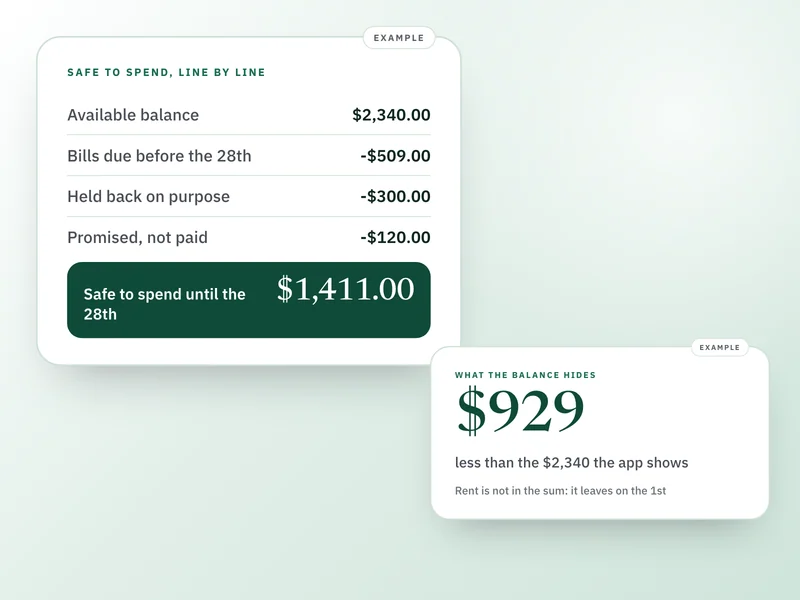 How much money is safe to spend after your bills?Your balance is not what you can spend. Take off the bills still due and the money you are holding back, in five steps, and one number is left.5 min read
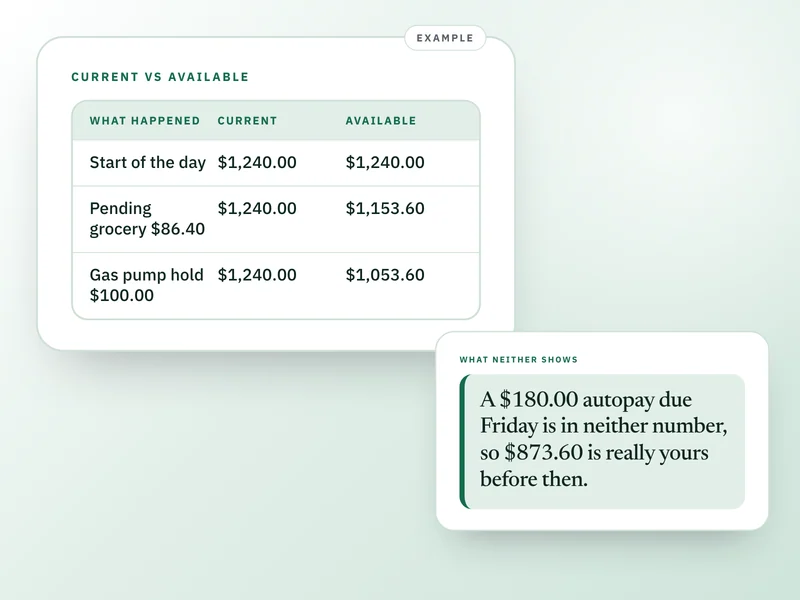 Available vs current balance: which one can you spend?Current balance counts what has posted. Available balance also subtracts holds and pending items. Neither one knows about the bills still coming.5 min read
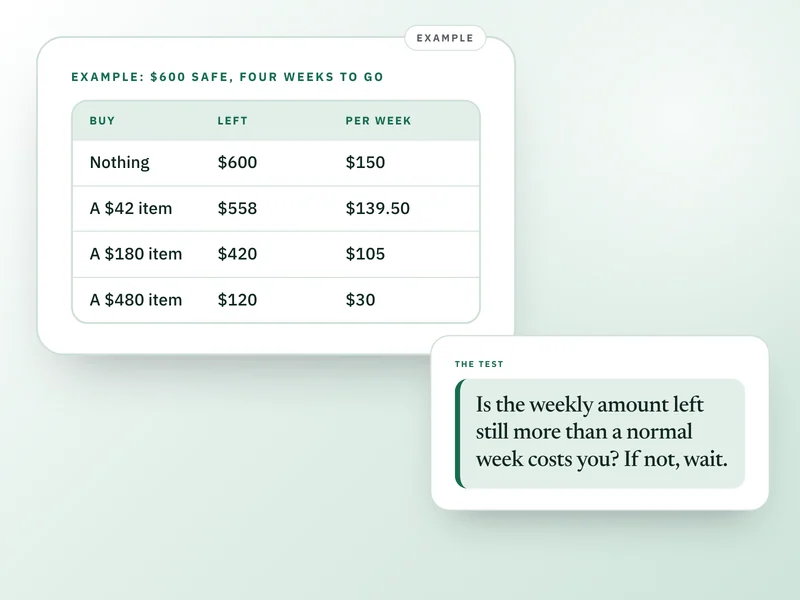 How to know if you can afford something before you buy itSafe-to-spend minus the price, divided by the weeks to payday, against a normal week. A $42 and a $480 example, plus installment plans.5 min read
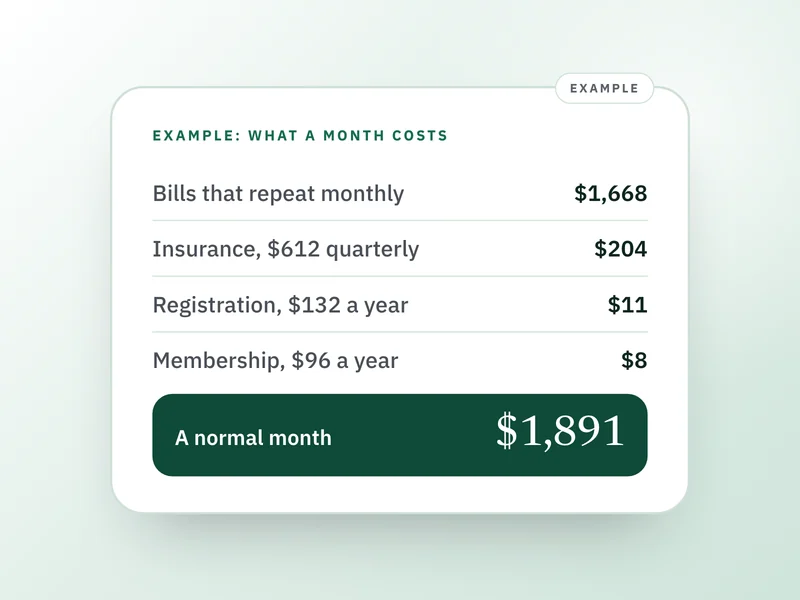 Monthly bills list: include the bills that are not monthlyA six column list, plus the math for turning quarterly and annual bills into a monthly amount: $612 every three months is $204 a month.6 min read
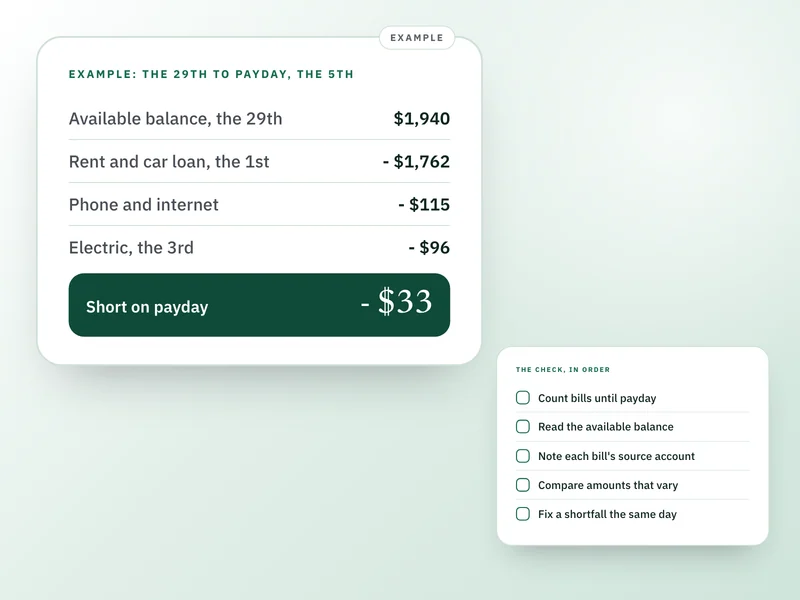 Before your bills come out: a two minute autopay checkTwo minutes before your busiest autopay date: what leaves before payday, which account each bill pulls from, and what changed. US bank accounts.6 min read
A budget that survives a bad month
Plain methods for setting a budget up, and for coming back to it after it slips.
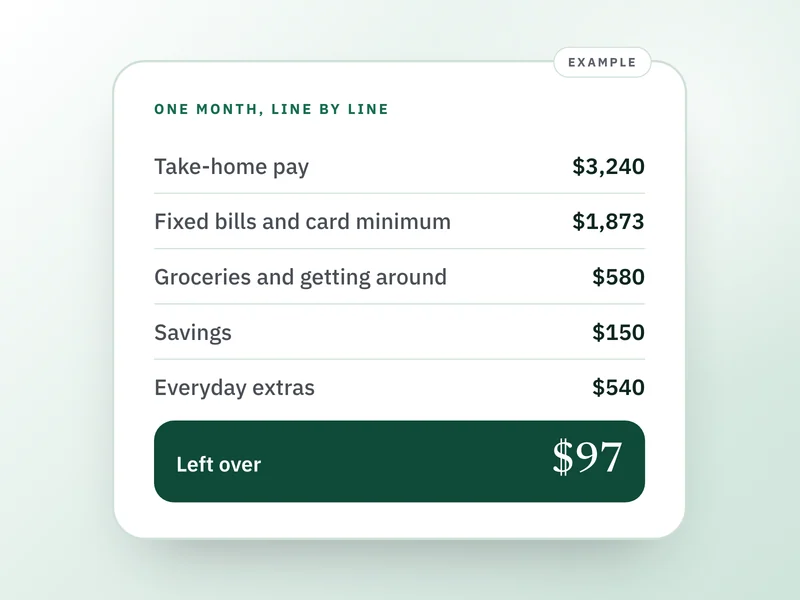 How to make a monthly budget for the first timeTake-home pay, every bill, real spending from your statements, then subtract. A $3,240 example month, a fix for a negative number, a weekly check.5 min read
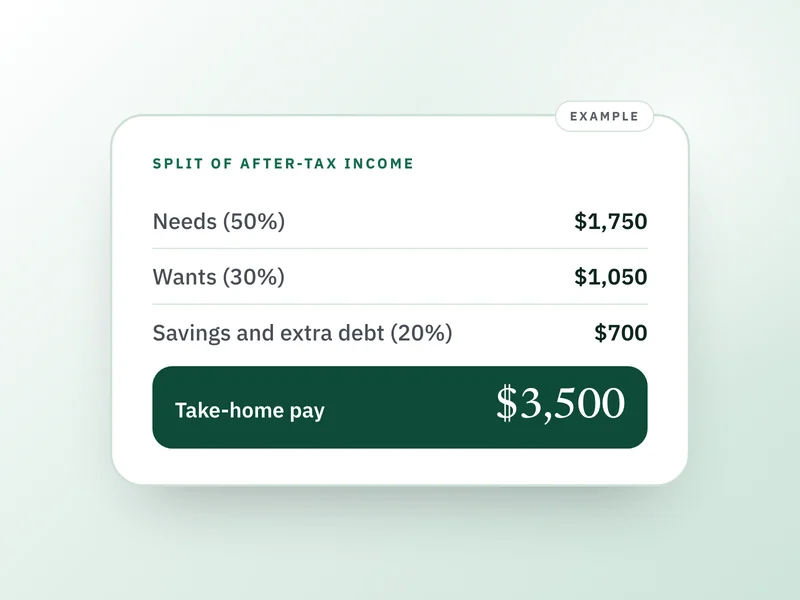 The 50/30/20 rule: who it fits and where it breaksHalf to needs, thirty percent to wants, twenty to savings and debt. Test it against your own month in five steps, and what to do at 60 percent needs.5 min read
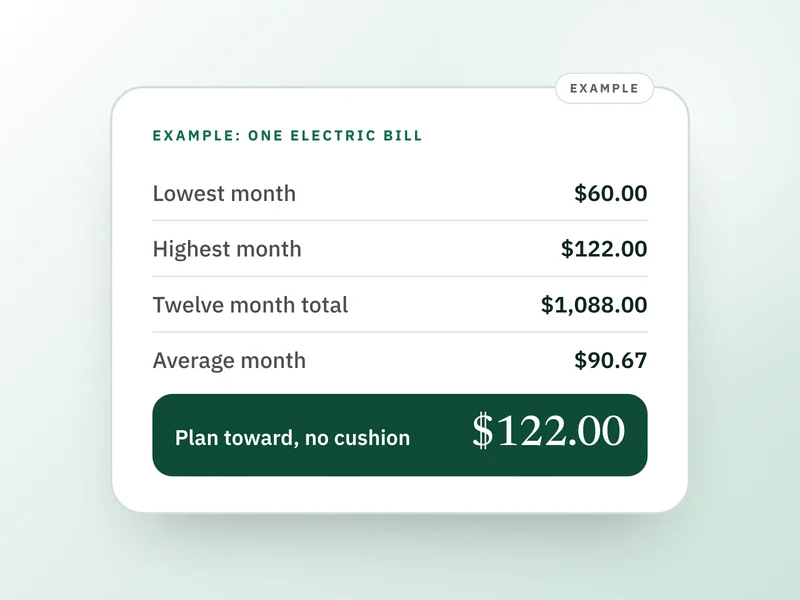 How to budget for bills that change every monthPull twelve months, find the average and the high, and keep the gap in a pot. A twelve month example, and when a utility's budget billing beats it.5 min read
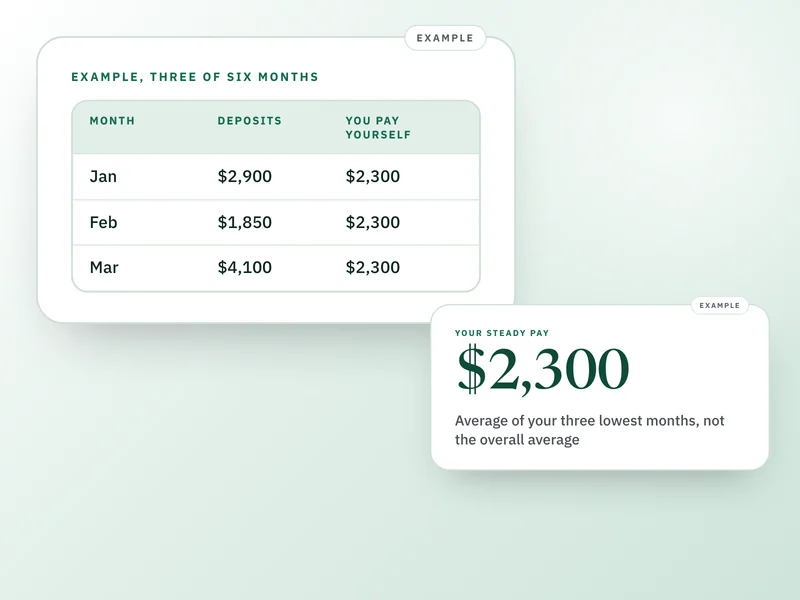 How to budget with irregular income: count what has landedBudget from your lowest months, not your average. Pay yourself a steady amount from a holding account, set tax aside, and count only money that has landed.5 min read
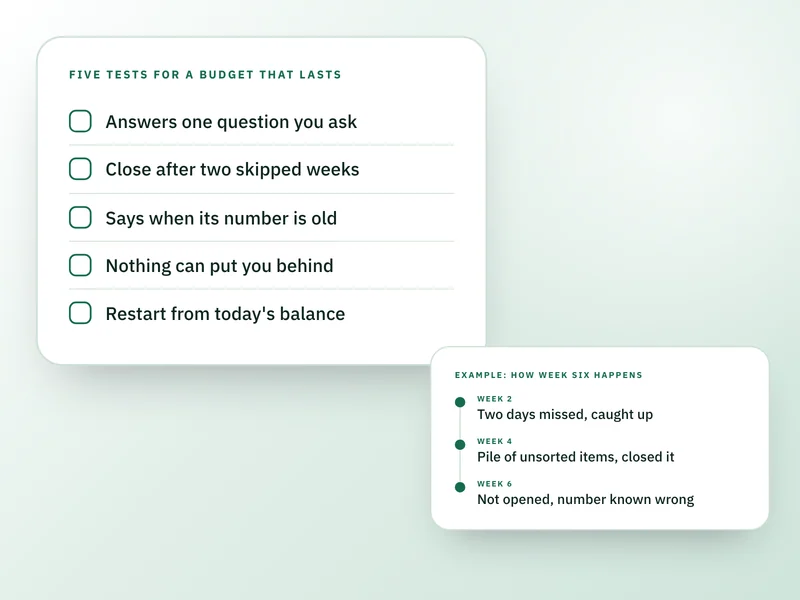 Why budgets get dropped, and what one that lasts needsA budget usually dies of upkeep, not willpower: the numbers drift, you stop trusting them, you stop opening it. Five tests for one that lasts.6 min read
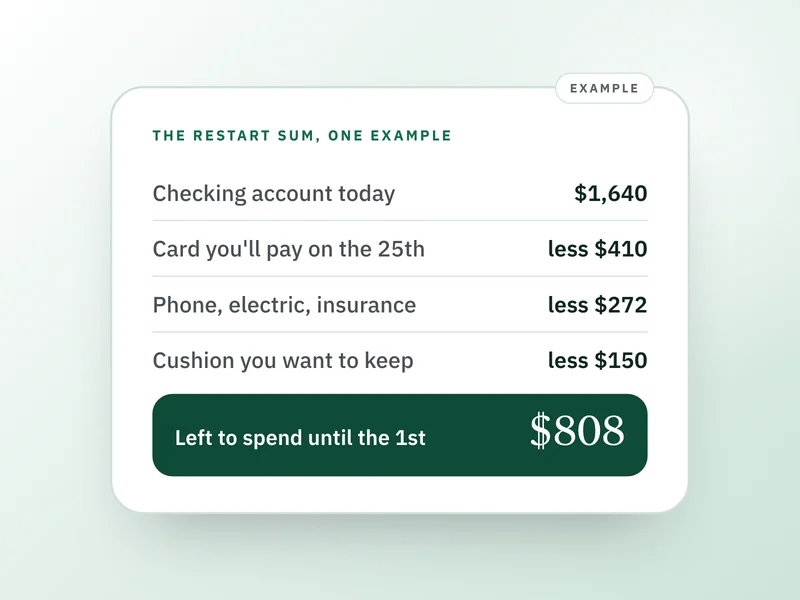 You fell off your budget: how to restart this monthYou do not need to catch up on six weeks of receipts. You need today's balance, the bills still coming, and one clear number.6 min read
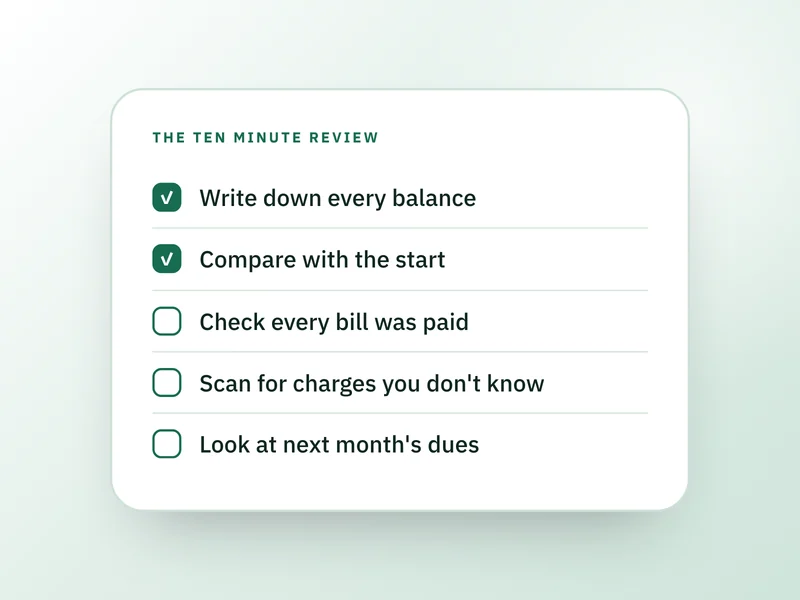 End of month money review: a ten minute checklistNote where the month ended, check every bill, choose what carries into next month, and start clean without turning it into a lecture.5 min read
Getting scattered finances in order
For when accounts, statements and shared costs are spread everywhere and need one home.
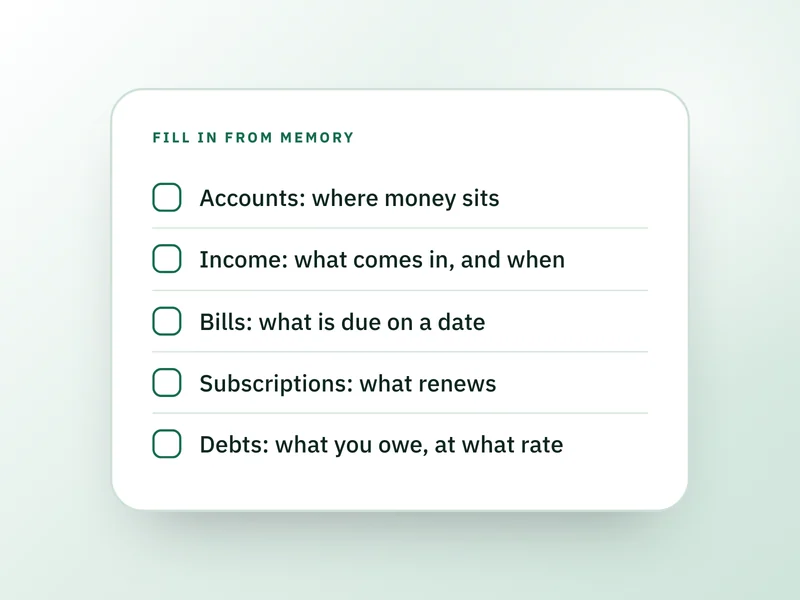 How to organize your finances when everything is scatteredBank apps, statements, a notes file and a lot in your head: a ten minute starting page you can fill in from memory, with the gaps marked.6 min read
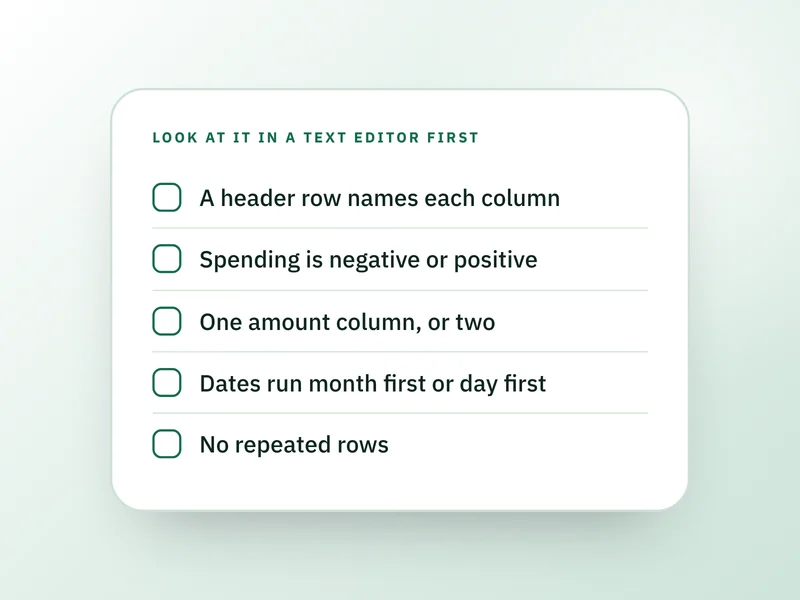 How to import a bank statement CSV: check the file firstDownload the file, check its shape, map the columns and catch duplicate rows, plus what a list of past transactions cannot tell you.6 min read
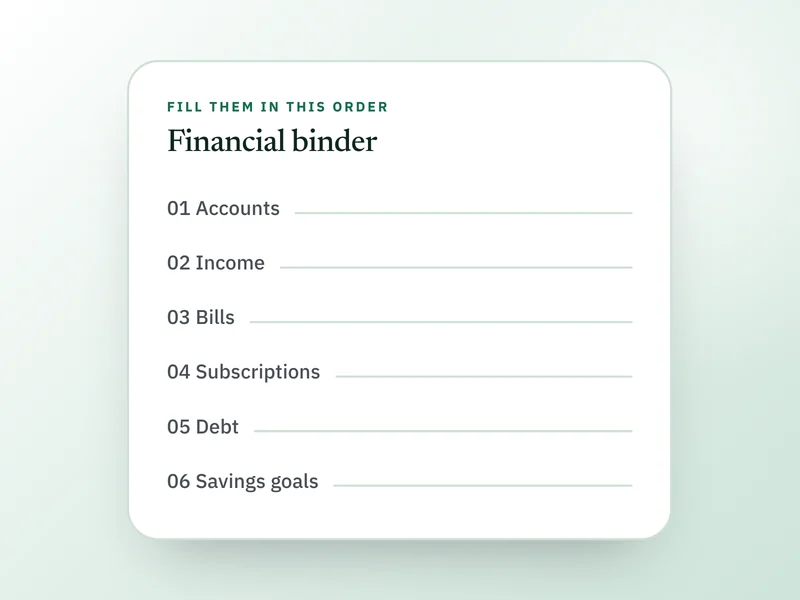 Financial binder: what to include and how often to updateSeven sections cover most of a financial binder: what each holds, how sure to be about every entry, and a short routine to keep it current.6 min read
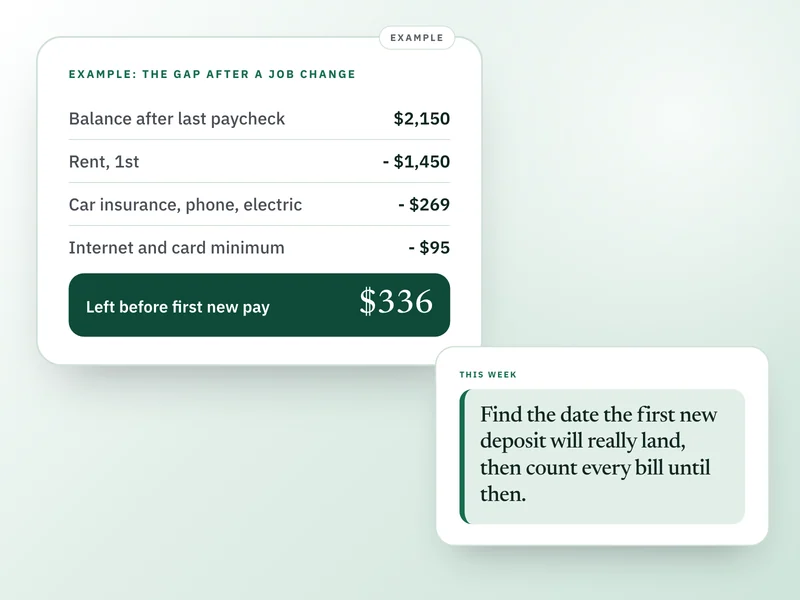 Sort out your finances after a job change, move or divorceSix steps in the same order after a new job, a move or a separation: your payday gap, autopays, the old 401(k), COBRA and joint accounts (US).8 min read
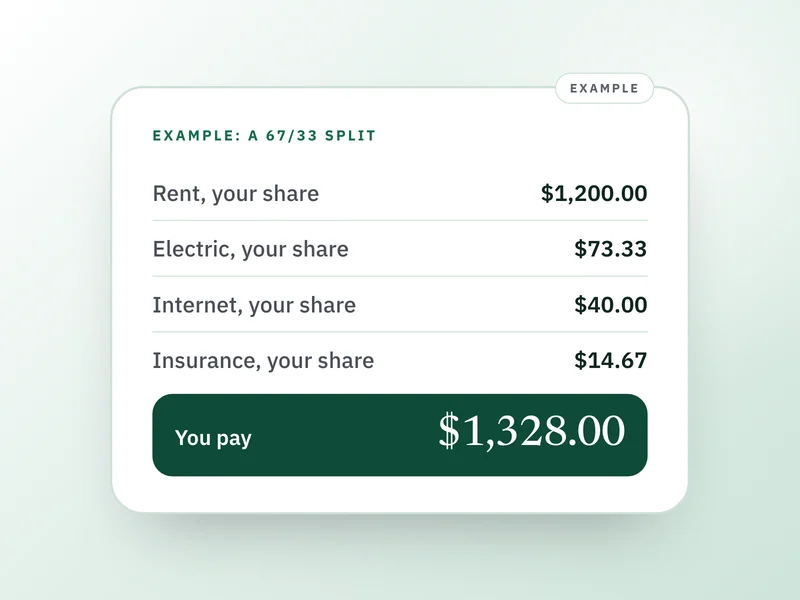 How to split bills with a partner or roommate: 3 methodsEqual, by income or by room: the formula with a worked example, what to agree before the first payment, and what to say when you bring it up.7 min read
Finding and cancelling subscriptions
How to list every recurring charge, including the annual ones, and end the ones you do not want.
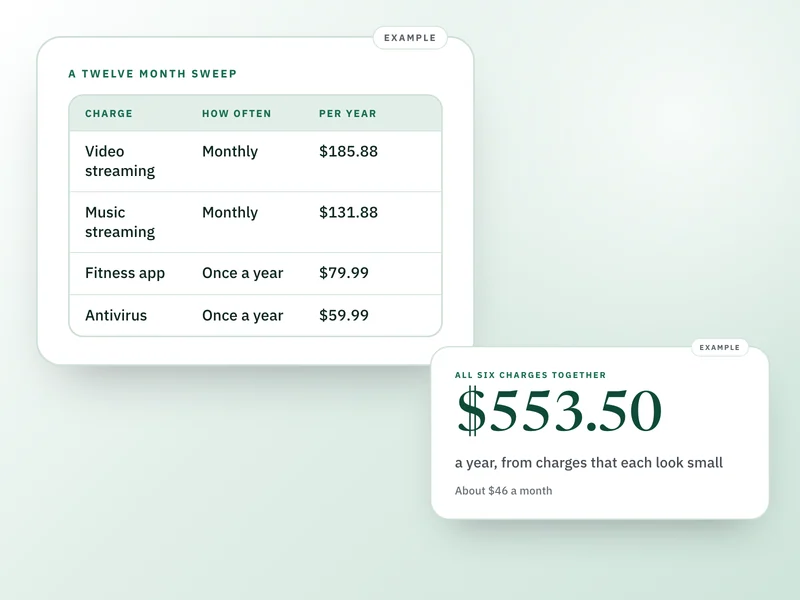 How to find all your subscriptions, including annual onesA twelve month statement sweep, plus the places charges hide: Apple and Google lists, PayPal, old cards and free trials that turned into paid plans.7 min read
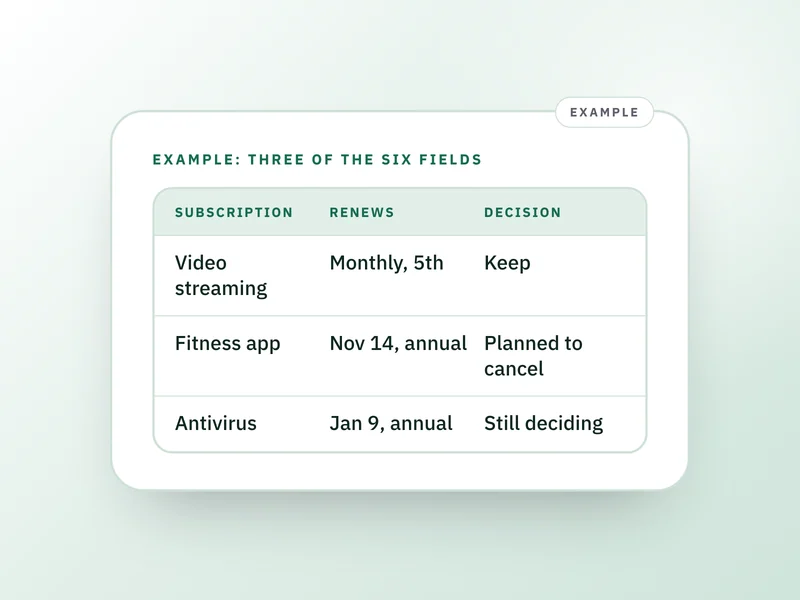 Subscription tracker: the six fields that catch renewalsThe renewal date beats the price. What to write down for each subscription, the annual charge trap and a five minute monthly check.5 min read
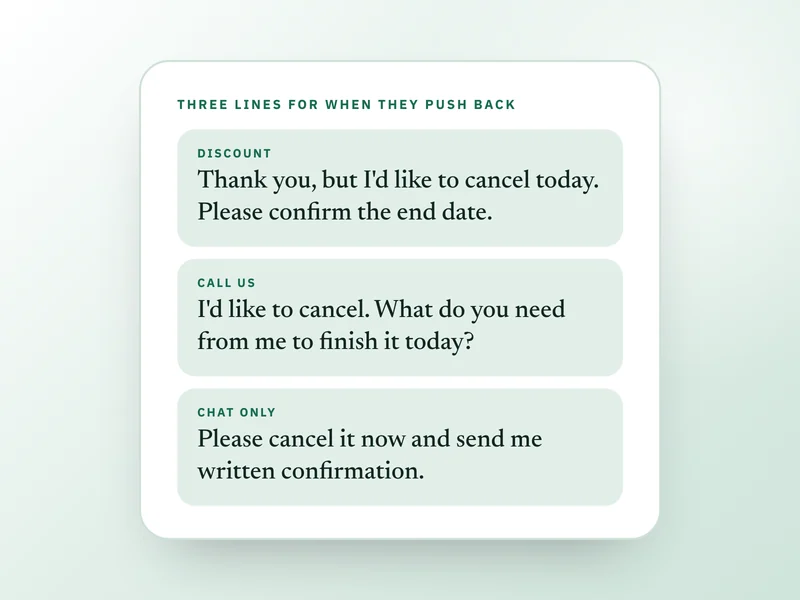 How to cancel a subscription that is hard to cancelWhere cancel buttons hide, what to say when the company pushes back, and how to make a card issuer stop a charge that should have ended.6 min read
Missed payments, debt and savings
What to do after a payment slips, how to compare ways of paying debt down, and how to build a cushion.
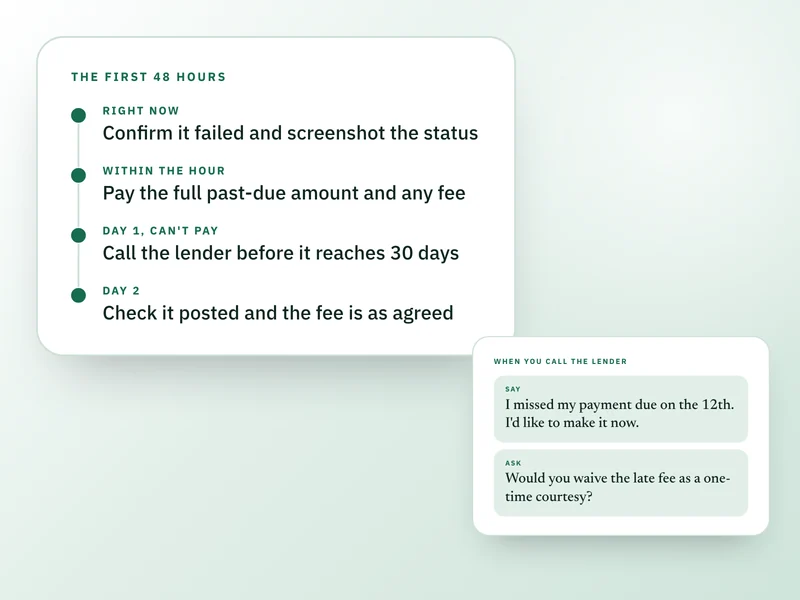 You missed a payment. What to do in the next 48 hoursA five step plan for the first 48 hours, what usually happens at a few days late versus a month late, and what to say when you call.7 min read
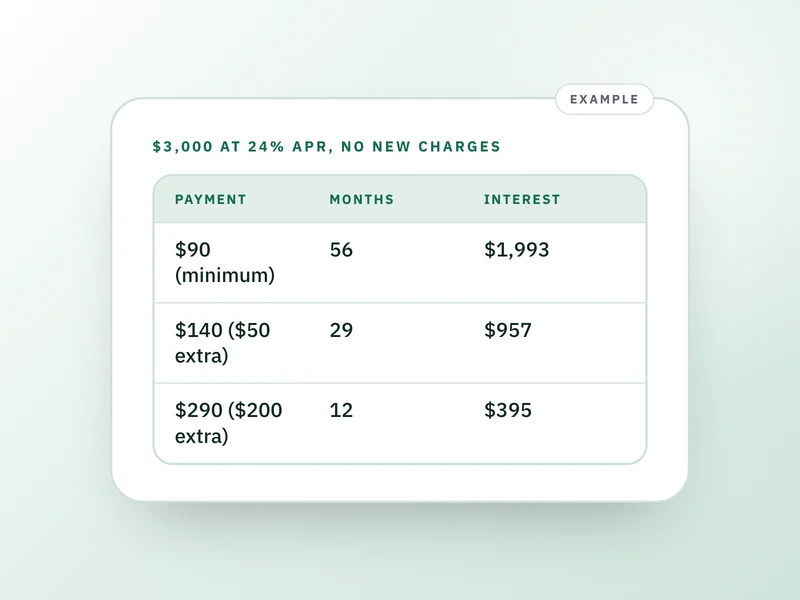 How long paying only the minimum takes on credit card debtA $3,000 card at 24 percent: the months and interest on a $90 payment, then with $50 and $200 extra. Why a shrinking minimum takes far longer.5 min read
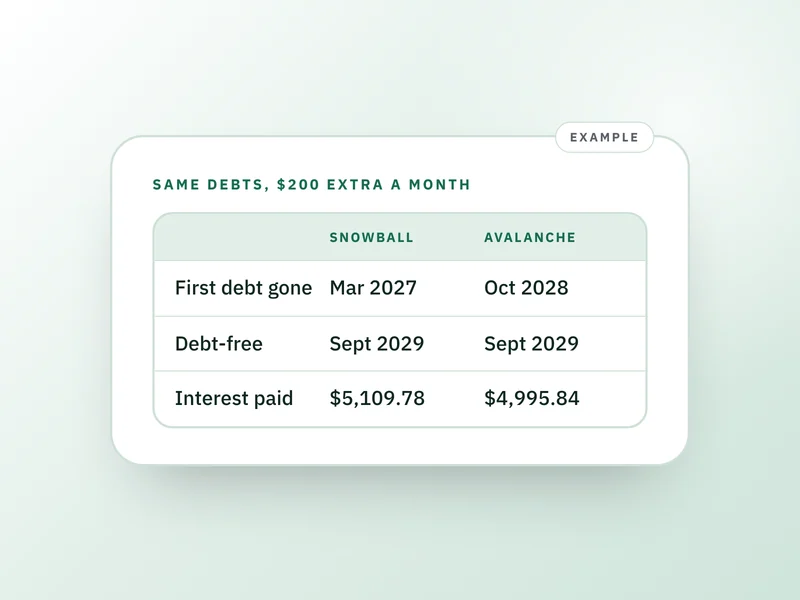 Debt snowball vs avalanche: which costs less, which sticksA three-debt example with interest totals, why the two orders often finish close, and how to pick the one you will keep.6 min read
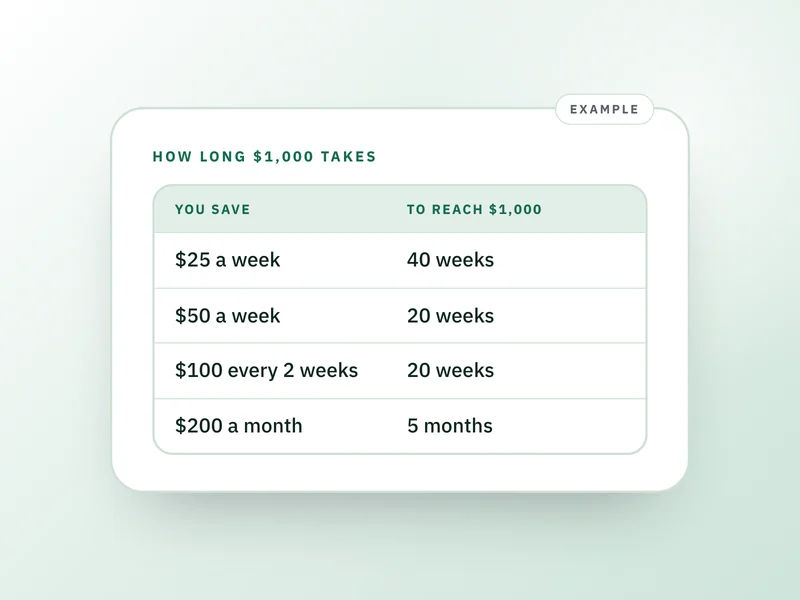 How to build your first $1,000 emergency fundA $1,000 starter fund keeps small surprises off a card. Pick a weekly amount, find the first deposit, choose where to keep it and know when to use it.5 min read
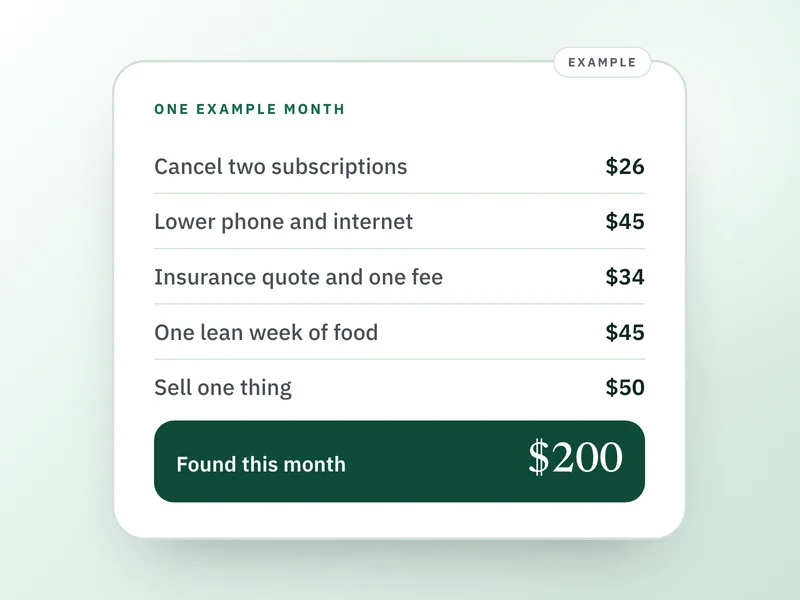 How to find $200 this month without a big life changeSeven specific moves with rough dollar amounts, worked into an example month that adds up to $200, plus scripts for the calls.5 min read
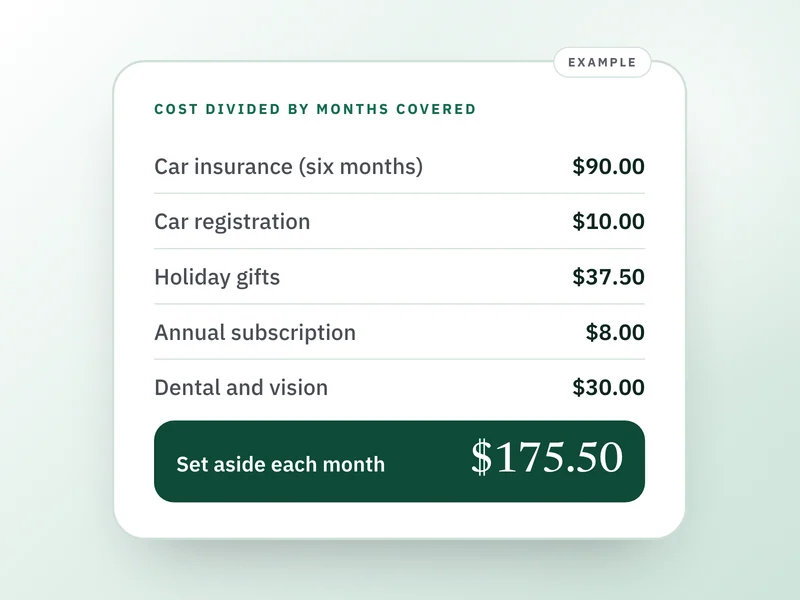 Sinking funds explained: save for costs you can see comingThe monthly amount from one formula, with a $600 example and a year of costs. Where to keep the money and how to tell it from an emergency fund.6 min read