Being an executor means you are legally responsible for gathering everything somebody owned, paying what they owed, and distributing the rest according to their will. It is an administrative job with legal weight, and it usually takes many months.
Most people find out they were named at the worst possible moment and have no idea what the role involves. Here is the honest version.
What the job actually involves
Six stages, in this order, and you cannot skip to the last one.
Find
Locate and secure everything: property, accounts, pensions, policies, possessions.
Value
Value the estate as at the date of death, which often needs professional valuations for property.
Apply
Apply for the grant of probate, or confirmation in Scotland, which is the legal authority to act.
Settle
Settle debts and taxes before anybody inherits anything.
Distribute
Distribute what remains according to the will.
Account
Keep records of all of it, because beneficiaries are entitled to see the accounts.
How long it really takes
Even a simple estate takes many months. Anything involving property, a business, overseas assets or a disagreement between beneficiaries takes considerably longer, and two years is not unusual.
The slow parts are rarely the ones people expect. Waiting for probate, waiting for a property to sell, and waiting for tax clearance take far longer than any of the tasks you actually perform.
The part worth taking seriously
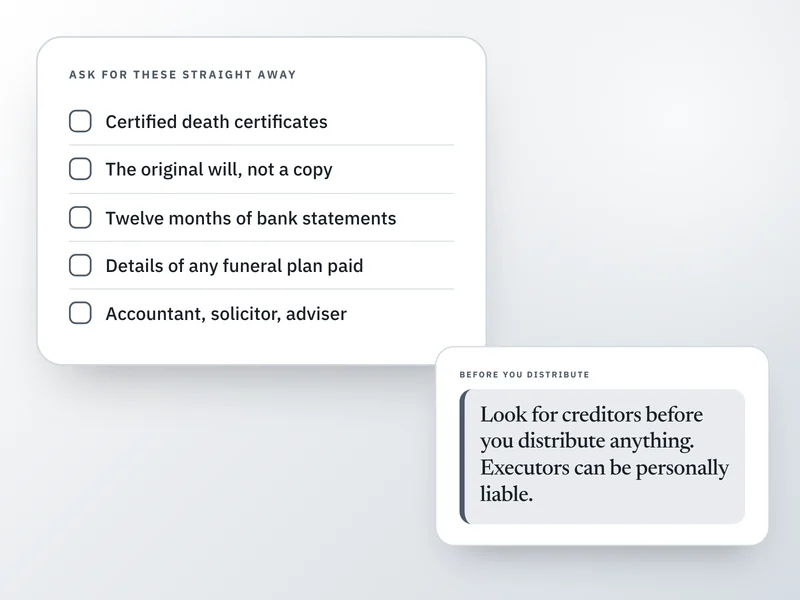
Executors can be held personally liable for mistakes. Distributing the estate before debts are settled is the classic one: if a creditor appears afterwards, the shortfall can land on you rather than on the beneficiaries who already spent it.
This is why the order matters, and why the standard advice is to look for creditors before distributing anything. It is also why executors of anything complicated usually involve a solicitor, paid from the estate rather than from their own pocket. In England and Wales, a notice under section 27 of the Trustee Act 1925 gives protection against claims you did not know about. Scotland and Northern Ireland have their own rules.
You can say no
Being named does not oblige you to serve. You can decline, formally, provided you have not already started acting as executor. Once you have begun dealing with the estate, stepping back becomes much harder.
Declining is not a betrayal. Somebody named you years ago, possibly before they had a business or a property abroad, and possibly before your own life got complicated. If you cannot give it the time, saying so at the start is far better than stalling for a year.
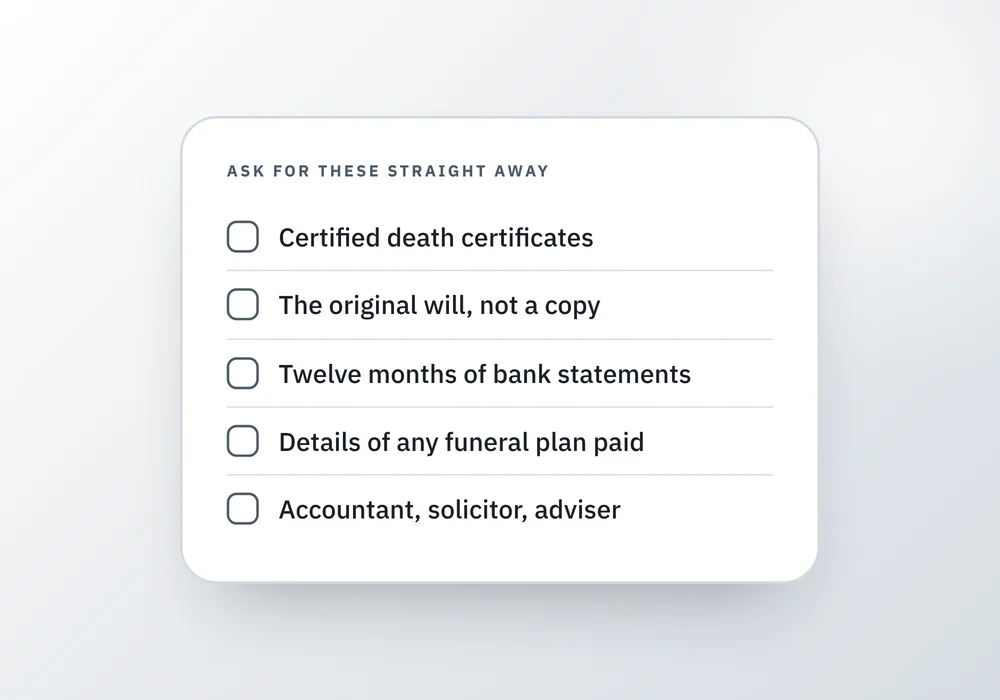
What to ask for immediately if you are acting
5 things to do
Ticks are for this visit only. Nothing here is saved anywhere.
Where to go next
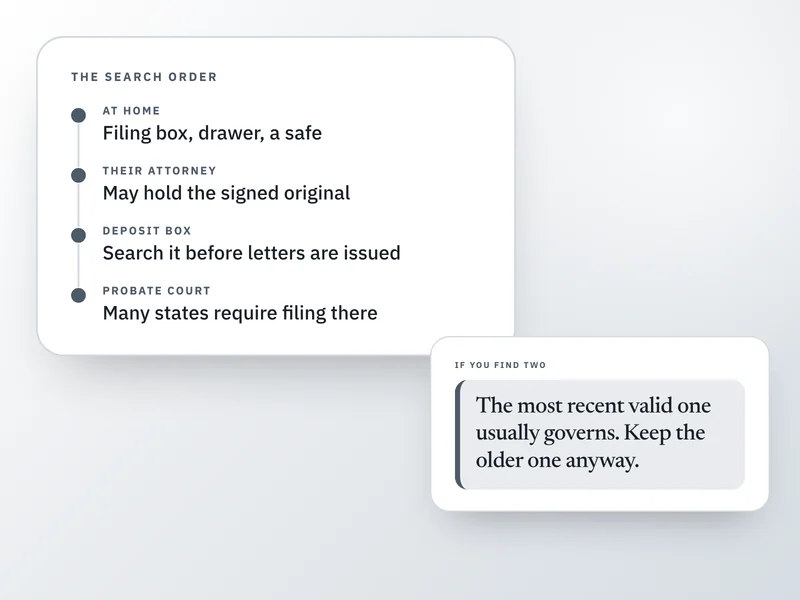 If this is where you areHow to find a will after someone diesIf you cannot yet find the original, this covers where wills are kept and what to do if several turn up.
- Named executor of a will: what you agreed to (US)
This is the US version for readers outside the UK, where executors and the court process work differently.
- What to do when a parent dies: the first fortnight (UK)
To see the registration and certificate steps that come with the role, use the UK first-fortnight guide.
- How to find someone's accounts after they die
To trace accounts, pensions and policies for the estate, this gives a search order that works when little is written down.