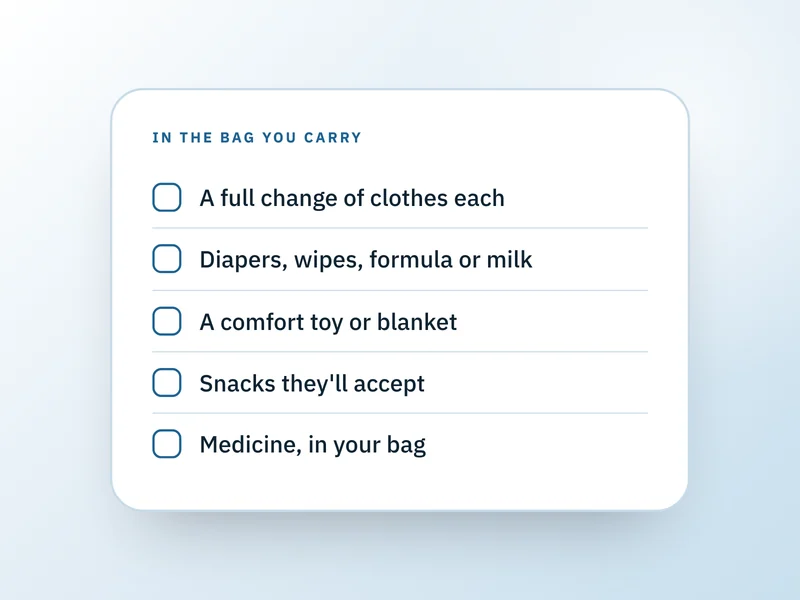
Traveling with a child means three things change: what goes in the bag you carry, what you need on paper, and how much you plan into a day. Pack a full change of clothes and comfort items for each child in your carry-on, note each child's documents under their own name, and plan fewer things earlier in the day.
This is for a family flying or driving for a few days to a week, with a baby, toddler or school-age child. It can't tell you an airline's rules for a lap infant, car seats on board or what a country requires for a child's entry, so those you confirm at the source.
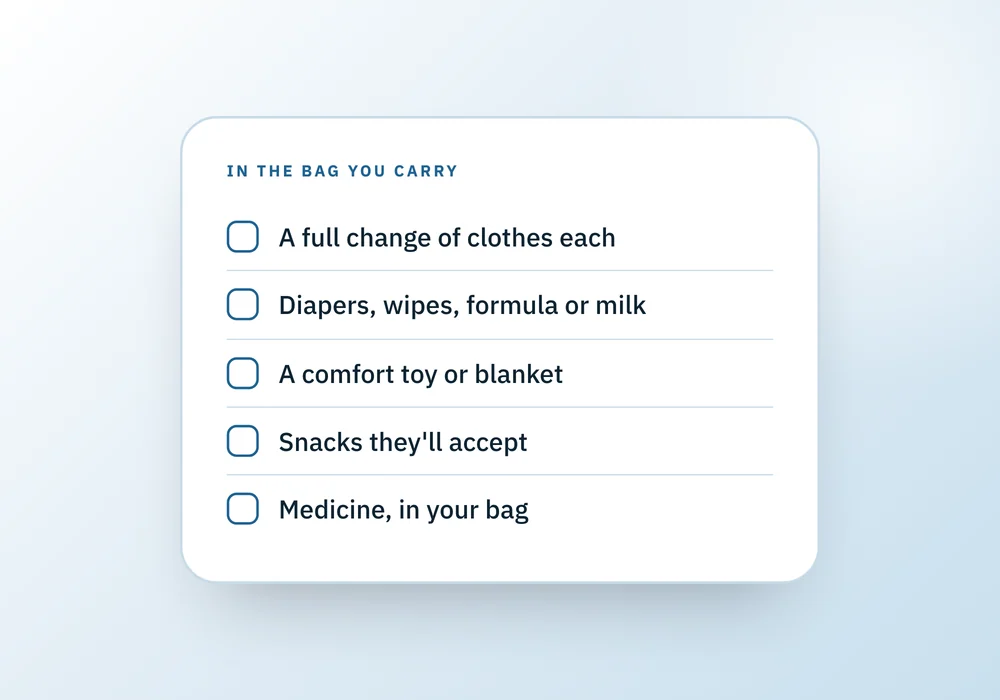
Example: the bag you carry, by age
An illustration, not a complete list. Scale it to the child and to how long the trip really is.
Baby (under 1)
- Plane bag
- Diapers, wipes, 2 outfits, formula or milk, a blanket
- Extras to think about
- Bottles, spare pacifiers, a change of shirt for you
Toddler (1 to 3)
- Plane bag
- Diapers, wipes, 2 outfits, snacks, a comfort toy
- Extras to think about
- Sippy cup, a stroller, something new to unwrap
Child (4 to 12)
- Plane bag
- 1 change of clothes, snacks, a book, headphones
- Extras to think about
- A tablet loaded before you leave, a water bottle
| Age | Plane bag | Extras to think about |
|---|---|---|
| Baby (under 1) | Diapers, wipes, 2 outfits, formula or milk, a blanket | Bottles, spare pacifiers, a change of shirt for you |
| Toddler (1 to 3) | Diapers, wipes, 2 outfits, snacks, a comfort toy | Sippy cup, a stroller, something new to unwrap |
| Child (4 to 12) | 1 change of clothes, snacks, a book, headphones | A tablet loaded before you leave, a water bottle |
The bag that has to stay with you
Say your flight is delayed two hours at the gate, and your toddler has just thrown a full cup of juice down her shirt. Everything she needs is in the suitcase you checked. That's the whole reason for the rule that follows: a change of clothes for each child, and the things you'd need for an unplanned extra night, go in the bag you carry, never the one you check.
Per child, in the bag you carry
6 things to do
Ticks are for this visit only. Nothing here is saved anywhere.
Formula, milk, gear and security
TSA treats these differently from ordinary liquids. Formula, breast milk, toddler drinks and baby food, including pouches, are allowed in your carry-on in amounts greater than 3.4 ounces (100 milliliters), and they don't have to fit in the quart-size bag. Tell the officer you have them at the start, and take them out of the bag for separate screening. Ice packs, freezer packs, gel packs and liquid-filled teethers are allowed too, and you don't need your child with you to bring these things. Children 12 and younger receive modified screening, and children aren't separated from their parent or guardian. Strollers, car seats, booster seats and baby carriers go through the X-ray machine, and you can put small items in a stroller pocket or on the belt.
Paperwork, per child
List each child's documents under their own name, and note where each one is kept. Children under 18 don't need ID for a domestic flight in the United States, according to TSA, but a trip abroad is different: each child generally needs their own passport, and entry rules for minors, including permission letters when one parent travels alone, vary by country. Confirm those with the State Department and the destination's official entry page. Airline rules for a lap infant, and for bringing a car seat on board, differ by airline, so read your airline's page before you go. The travel document checklist shows what to record for each traveler.
Pace: a day with room for a bad one
- Plan fewer things, and plan them earlier in the day, before naps and hunger.
- Leave one gap in each day, and one day in the trip with nothing in it.
- Decide what you'll drop first if the day goes badly, before it does.
- Build in travel time for the trip itself: a slow security line, a stroller to fold, a diaper to change.
- For a drive, plan stops around the child, not the map. See the road trip planning checklist.
What can go wrong
- Packing everything for the child and nothing extra for yourself. A spare shirt is worth its space.
- Putting the only stroller, formula or diapers in a checked bag.
- A packed day with no slack. One missed nap can take out the afternoon.
- Assuming a rule you've heard is current. Airline and country rules for children change, and only the official page is up to date.
- One adult holding every child's papers with no note of where they are.
Related guides
For the method these lists build on, see packing list for a week away. If space is tight, the carry-on only list starts with the bag. For a group, see how to plan a group trip.
What the Companion does with this
In Travel Companion you add each person who's traveling and can mark someone as a child. Two starting packing lists, Children and A baby, then add items for each child you've recorded: seven items per child plus two shared for Children, and seven per child plus three shared for A baby. Nothing is added until you press the button, and you can remove or change any of it. Two limits: the starter wording uses UK words, such as Nappies, Muslin cloths, Pram or buggy and Baby sleeping bag, so change those. And each person can carry a private note of requirements, but the app doesn't share anything with anyone. See the Travel Companion page.
Questions people ask
What should I pack in a carry-on for a baby?
Diapers, wipes, two changes of clothes, formula or milk, a blanket, spare pacifiers and a change of shirt for yourself, plus enough of each for an extra night if the flight is delayed. Keep any medication in the same bag. Tell the security officer about formula and milk, since it doesn't have to fit the 3.4-ounce liquids limit.
Can I bring formula and breast milk through TSA?
Yes. TSA allows formula, breast milk, toddler drinks and baby food in carry-on bags in amounts greater than 3.4 ounces. Tell the officer at the start and take them out for separate screening. Ice packs and gel packs are allowed as well. Your child doesn't have to be present.
Does my child need ID to fly in the United States?
Not for a domestic flight, according to TSA: children under 18 don't need identification. International travel is different, and a child generally needs a passport of their own. Airlines may ask for proof of age for a lap infant, so check your airline's page.
Do strollers and car seats go through security?
Yes. TSA says strollers, car seats, booster seats and baby carriers must go through X-ray screening, and small items can stay in a stroller pocket or go on the belt. Whether you can bring a car seat on board, or gate-check a stroller, depends on your airline.
How much should I plan on a trip with a young child?
Less than you think you can manage. One or two things a day, earlier rather than later, with a gap in the middle and one empty day in the trip. If a bad morning wipes out the plan, you still have somewhere to fall back to.
Sources and how we checked
- TSA: traveling with children: Modified screening for children 12 and under, gear screening, exempt infant nourishment and gel packs.Checked 26 September 2026.
- TSA: baby formula and breast milk: Formula, breast milk and baby food allowed over 3.4 oz, declared and screened separately.Checked 26 September 2026.
- TSA: acceptable identification: Children under 18 do not need ID for domestic travel.Checked 26 September 2026.
Where to go next
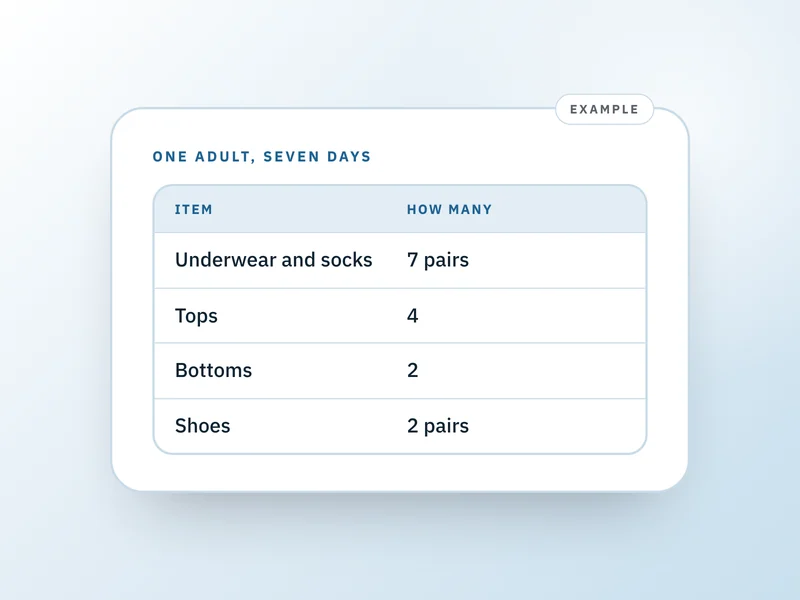 If this is where you arePacking list for a week away, by personFor the full per-person packing method that the child lists build on, start with this guide.
- Travel document checklist: what to carry and where
Each child has papers to note, and this shows what to carry and where to keep it.
- Carry-on only packing list: how to fit it in one bag
If you are trying to travel light with a child, this covers picking the bag first and packing to a list.
- Road trip planning checklist: stops, stays, car and pack
Driving with children means planning stops around them, and this covers daily distance, stays and the car check.