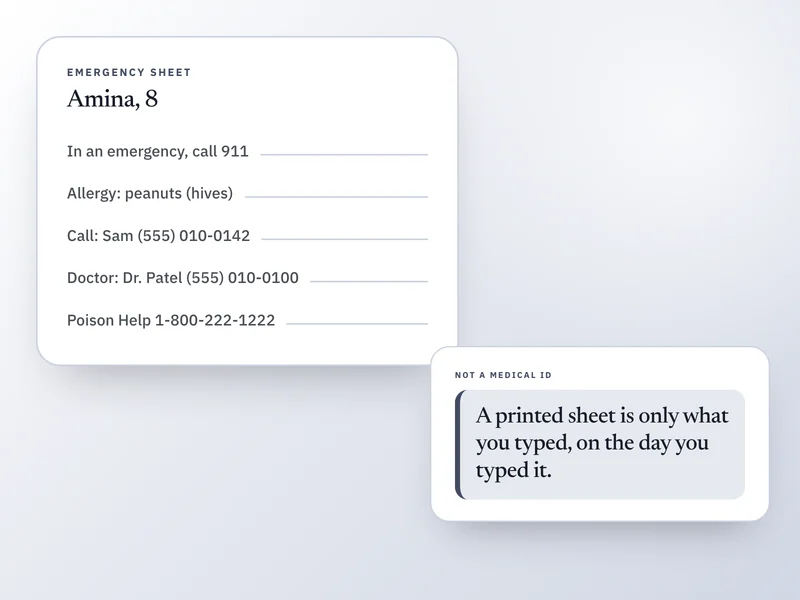
An emergency sheet is one page with who to call, the person's allergies, what they take, their doctor and their insurer. Put allergies near the top, write every number with its area code, and keep the sheet where someone else could find it in a minute.
This is for US households, where the emergency number is 911. It's a page of what you typed, not medical advice, and it isn't a medical ID.
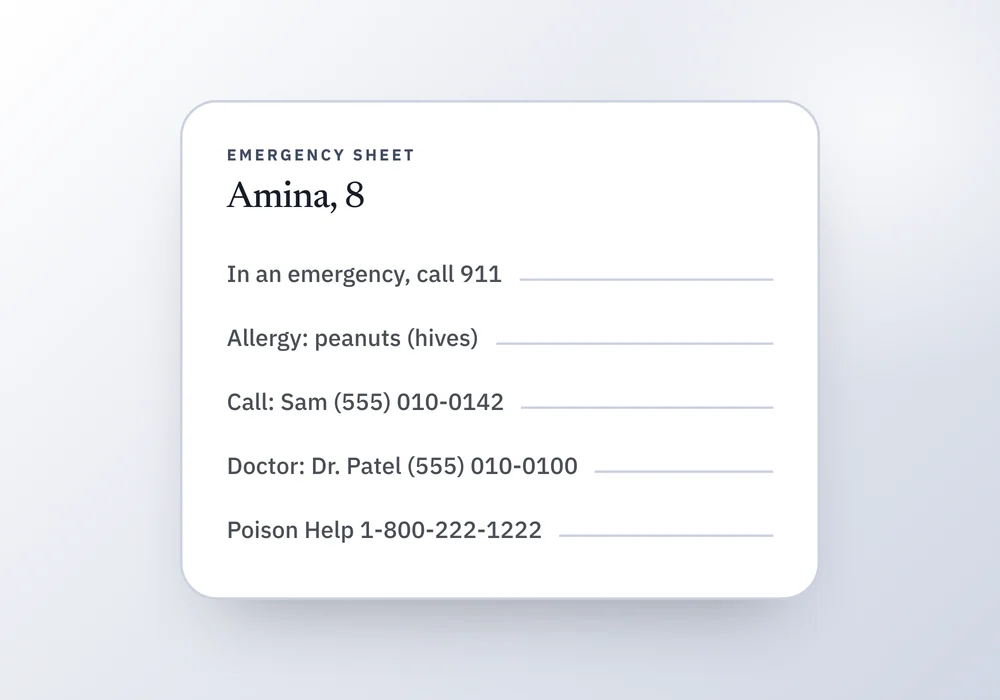
A filled sheet
Someone is standing in your kitchen, a grandparent or a sitter, and something has happened. They don't know your daughter's allergy or which of your two phone numbers is the one that picks up. A page on the fridge answers both. Here's what one looks like, filled in for Amina, 8.
An example with made-up names and numbers.
9 of 9 rows shown
In an emergency
- Example
- In an emergency, call 911
Name and age
- Example
- Amina, 8
Allergies
- Example
- Allergy: peanuts (hives)
Takes now
- Example
- Albuterol inhaler, as the label says
Call first
- Example
- Call: Sam (555) 010-0142
Call second
- Example
- Aunt Priya (555) 010-0177
Doctor
- Example
- Doctor: Dr. Patel (555) 010-0100
Poison help
- Example
- Poison Help 1-800-222-1222
Home address
- Example
- 12 Alder Street, so anyone can say it on the phone
| Field | Example |
|---|---|
| In an emergency | In an emergency, call 911 |
| Name and age | Amina, 8 |
| Allergies | Allergy: peanuts (hives) |
| Takes now | Albuterol inhaler, as the label says |
| Call first | Call: Sam (555) 010-0142 |
| Call second | Aunt Priya (555) 010-0177 |
| Doctor | Doctor: Dr. Patel (555) 010-0100 |
| Poison help | Poison Help 1-800-222-1222 |
| Home address | 12 Alder Street, so anyone can say it on the phone |
What goes on it, in order
- Put "In an emergency, call 911" at the top, so nobody has to think.
- Write the person's name and age, and their date of birth if a form would want it.
- Write allergies in the biggest type, with what the reaction is. "Peanuts (hives)" says more than "peanuts."
- List what they take now, copied from the labels: the medication list is the source, and this is a short copy of it.
- Add two people to call, and a way to tell them apart: "Sam, cell" and "Aunt Priya, in a different town." Two numbers in the same place aren't much use in a power cut.
- Add the doctor's name and number, and the pharmacy if you like.
- Add the Poison Help number, 1-800-222-1222. It's free and confidential, and it's a US number.
- Write your home address. Someone calling from your kitchen may not know it.
- Date the sheet at the bottom, so the next person knows how old it is.
A sheet is not a medical ID
A medical ID is a different thing from this page. It's meant to be worn or built into a phone so it can be found on the person, without anyone needing a key to your kitchen. Whether you want one is a question for your doctor. A printed sheet is only what you typed, on a day you typed it, and it can be out of date by spring.
Where the copies live
- Fridge: one copy, at eye level.
- Bag or glove box: a copy with the insurance line filled in.
- Anyone minding the children: a copy handed over, plus a word about where the other is.
What to leave off the fridge copy
A fridge sheet is visible to anyone who comes into your house, so leave the insurance member ID off it and put it on the bag copy. For the sitter version, with bedtime and the green cup, see the babysitter and grandparent info sheet. To choose what stays off a page you hand over, read what to leave off a health page you hand over.
What goes wrong
The sheet fails in three ways. The numbers change and nobody updates it. It holds so much that the allergy gets lost. Or it's in a drawer nobody else knows about. Check the numbers when you change phones, and reread it whenever a medicine changes.
Common questions
What information goes on an emergency contact sheet?
Who to call, allergies, what the person takes now, their doctor, insurance, and your home address. Put "call 911" at the top. Keep it to one page, so the allergy line can't get lost among the rest.
How many emergency contacts should I list?
Two is a good working number, and better if they live in different places or carry different phones. Write how to tell them apart, such as "cell" and "in another town." Say beside each name who they are to the person.
Is an emergency sheet the same as a medical ID?
No. A medical ID is worn or built into a phone so it can be found on the person. A printed sheet is a record of what you typed, and it can go out of date. Ask your doctor whether a medical ID makes sense for you.
Where should I keep it?
Where someone else could find it fast: the fridge, a bag, a glove box. Tell the sitter, grandparent or neighbor where it is. A sheet in a drawer helps only the person who filed it.
What is the poison control number?
In the US it's 1-800-222-1222. The Poison Help line describes itself as free, expert and confidential. In a life-threatening case, such as someone who has collapsed or can't breathe, call 911 instead.
What the Companion prints
Family Health Binder prints an Emergency card from what you've entered: name, age, allergies, conditions, medications, who to call, their doctor and insurance. You cut it out along the dashed line, and it says what it is: it reflects only what was typed in, isn't medical advice and doesn't replace a medical ID. It's paper, wider than a wallet card, and it can't be opened from a locked phone. The sitter version, the Caregiver sheet, carries "In an emergency, call 911." Emergency contact and insurance always print, so leave out what you don't want on paper. See the Family Health Binder.
What to do next
If you also want to write down who would speak for you about medical care, that's a separate job, covered in who would speak for you about medical care. Next step: fill the top three lines, allergies, first contact and doctor, and put the page on the fridge tonight.
Sources and how we checked
- Poison Control (poison.org): Poison Help line: Poison Help number 1-800-222-1222, described as free, expert and confidential, and the 911 note for collapse or trouble breathing.Checked 26 September 2026.
Where to go next
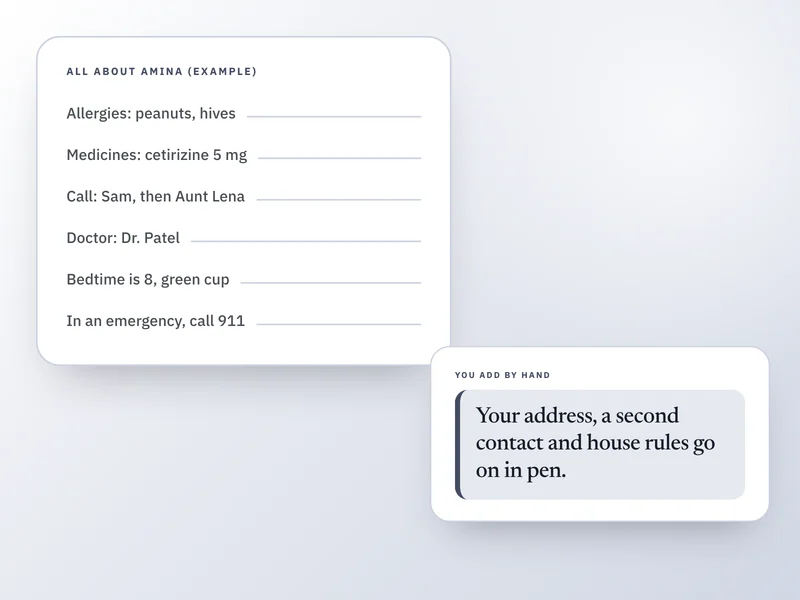 If this is where you areBabysitter information sheet: what to put on itWhen someone else is minding the children, this shows how to turn these facts into a sitter sheet.
- How to keep a family medication list
The medicines someone would need to know about belong on the sheet, and this shows how to write them down.
- What health information to share with a sitter or school
Deciding how much to put on a printed page others will see is easier with these three questions.
- Caregiver binder for a parent and kids: one page each
If a parent lives with you or relies on you, this shows how to keep one page each for everyone.